Compare dental implants and dental bridges to understand differences in longevity, bone preservation, cost, and long-term oral health benefits.
Losing a tooth affects more than just your appearance. It can change how you chew, speak, and even how your facial structure is supported over time. Fortunately, modern dentistry offers predictable, natural-looking solutions to restore both function and confidence.
Two of the most common options for replacing missing teeth are dental implants and dental bridges. While both can beautifully restore your smile, they differ in structure, longevity, and long-term impact on your oral health.
When a tooth is lost, the surrounding teeth begin to shift. The bone that once supported the missing tooth can gradually shrink. Over time, this can alter your bite and affect facial balance.

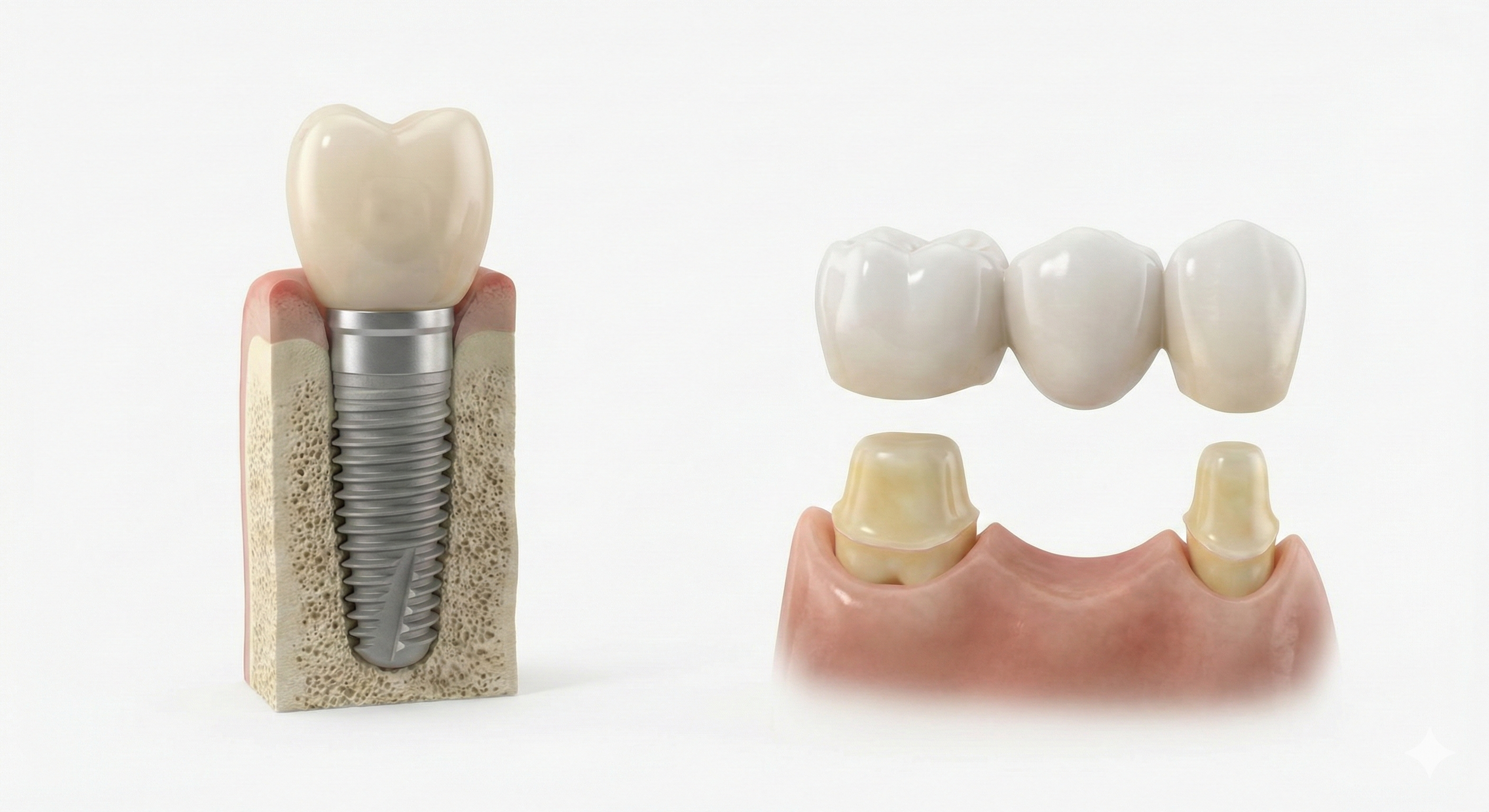
A dental implant replaces the tooth root and crown
A dental bridge literally bridges the gap created by a missing tooth. It consists of a false tooth supported by crowns placed on adjacent teeth.
A dental implant is a titanium post placed into the jawbone that functions as an artificial root. After healing, a custom crown is attached.

A dental bridge relies on neighboring teeth for support
Both implants and bridges restore missing teeth effectively. The best option depends on your oral health, goals, and long-term priorities. If longevity and bone preservation are your priority, implants are often the superior choice. If you prefer a non-surgical and faster option, a bridge may be appropriate.
Book your free smile consultation today and take the first step toward a confident, refreshed smile.
Book Consultation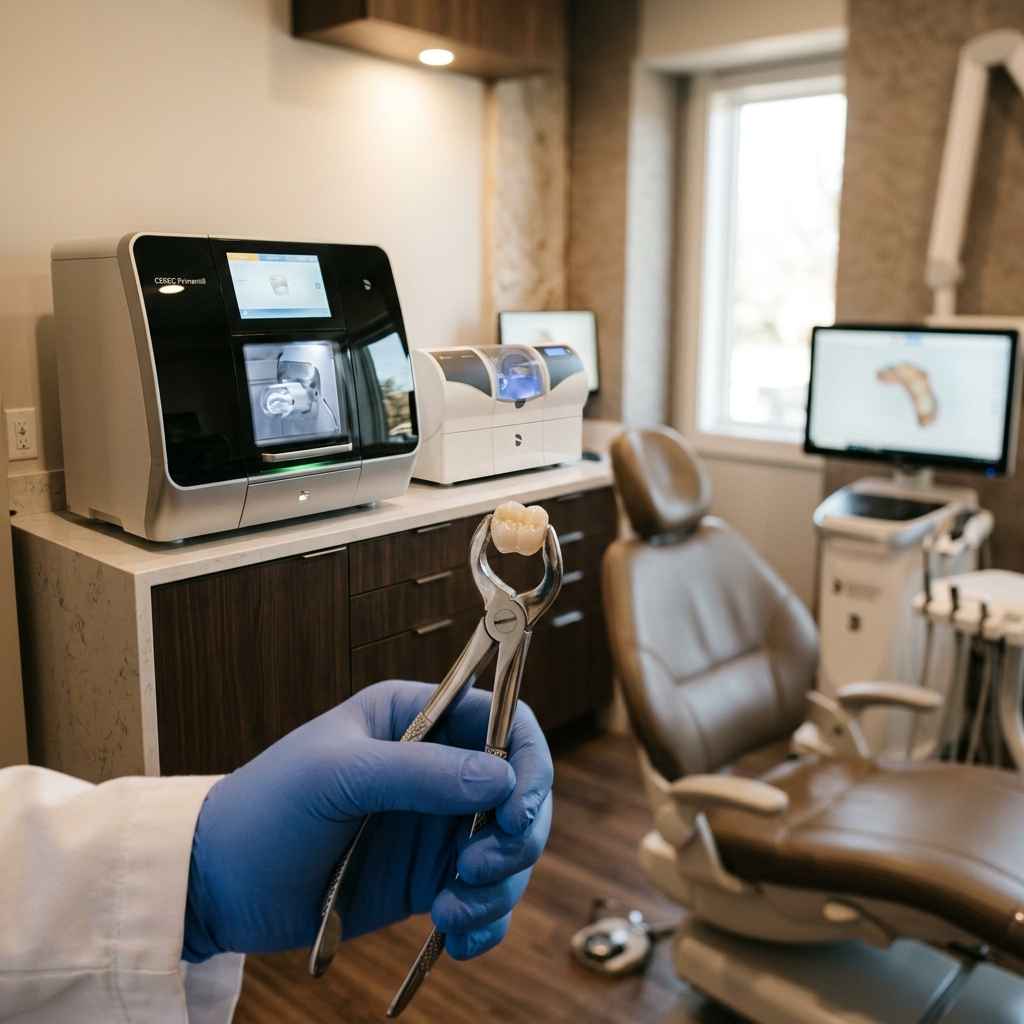
Discover how advanced digital dentistry allows us to craft and place permanent, high-quality crowns in a single visit, respecting your time without compromising on quality.
Read More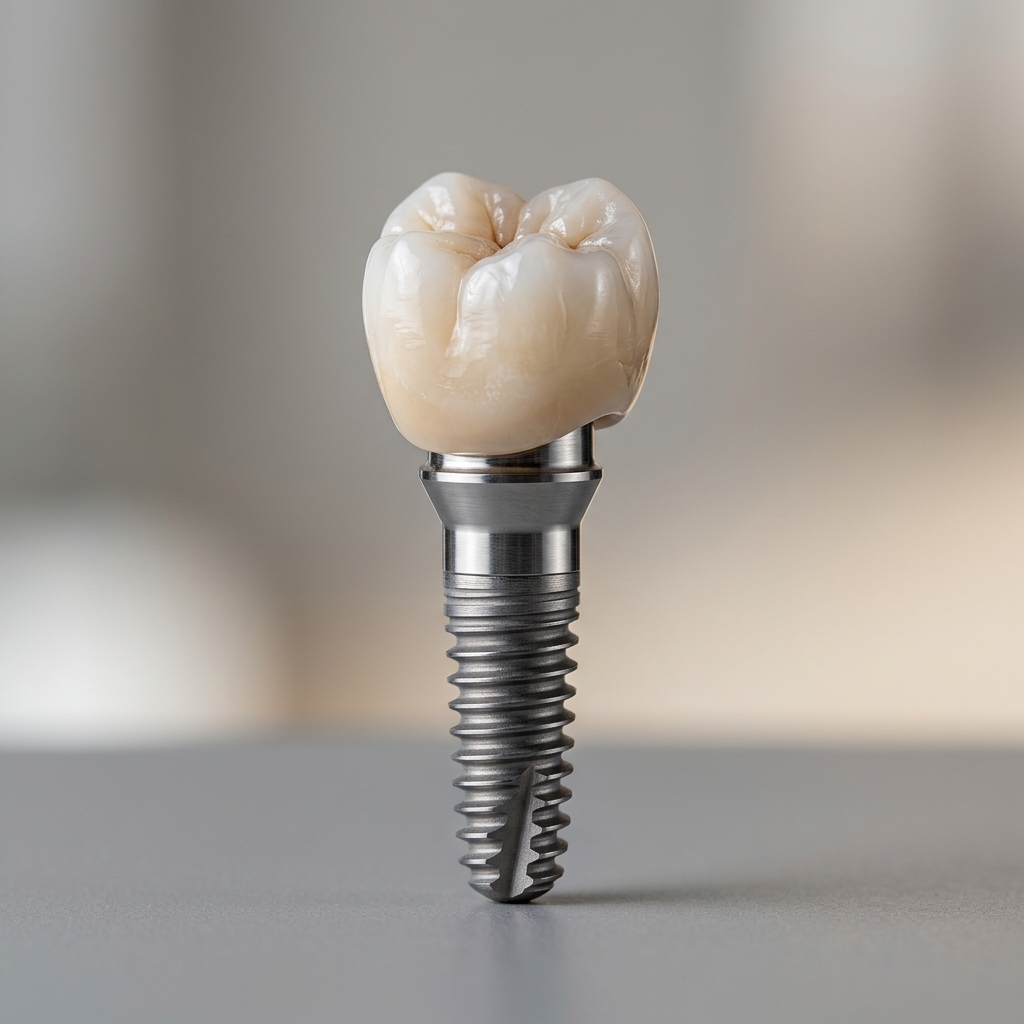
Dental implants are the gold standard for tooth replacement. Learn how Dr. Jen Moran-Kobes combines surgical precision with aesthetic artistry to restore function and confidence.
Read More